Signs Your Business Has Outgrown Its Manual Processes

H M Husnain
June 1, 2026 · 4 min read
In this article
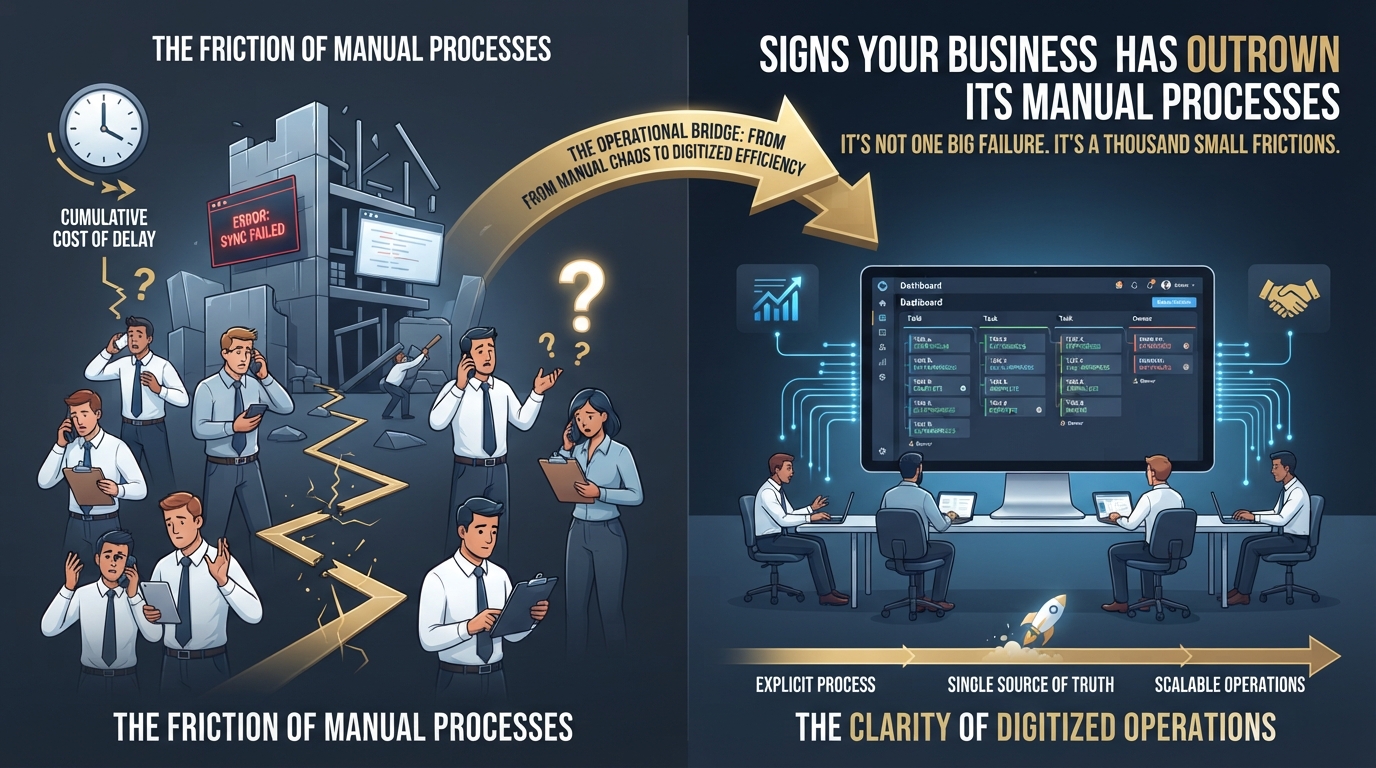
There's rarely one dramatic moment where manual processes stop working for a business. It's gradual, a slow accumulation of small friction points that everyone individually shrugs off, until enough of them are happening at once that something has to change.
The signs worth paying attention to
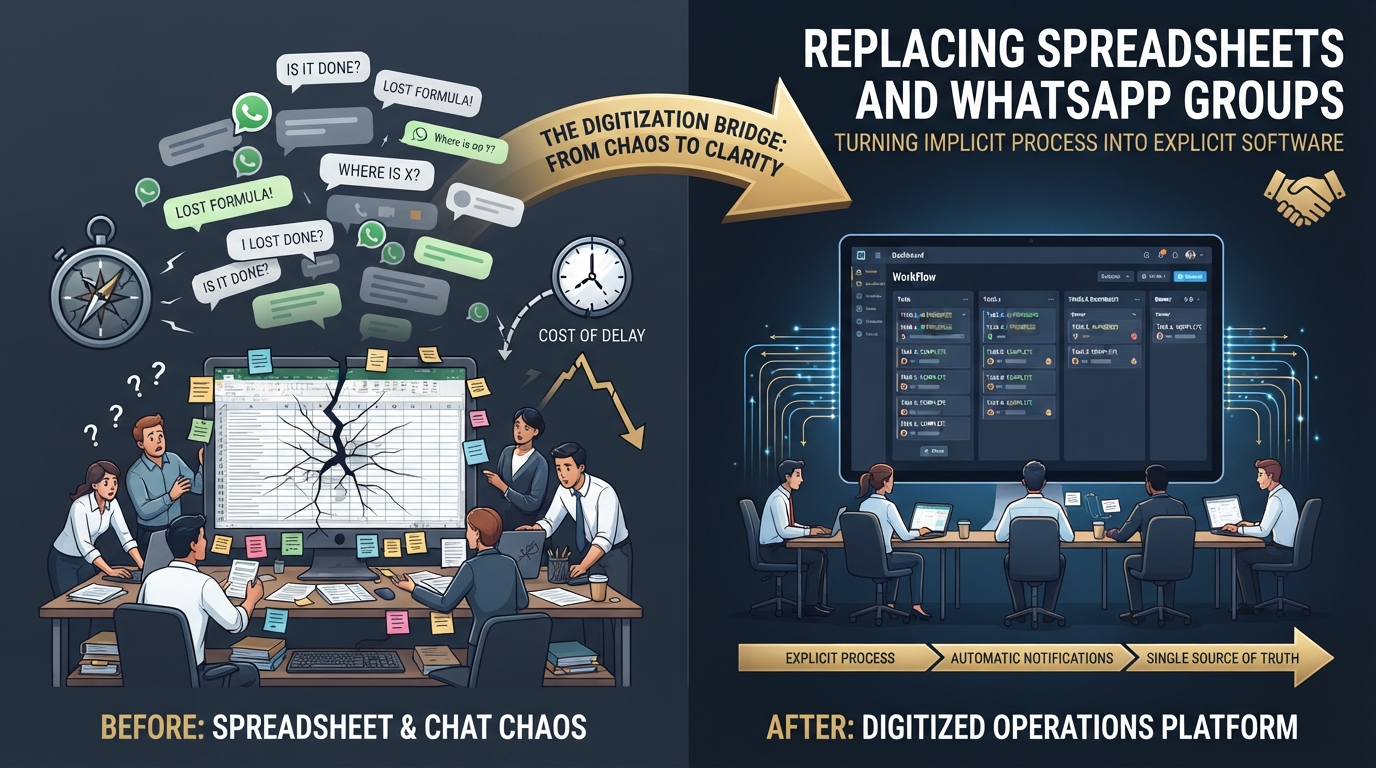
The same question gets asked in three different group chats because nobody's sure who has the current answer. Someone leaves the company and takes undocumented process knowledge with them, and things quietly break for a week. A number gets reported to leadership that turns out to be a version behind reality, because it lived in someone's head or someone's inbox rather than a shared source of truth. Onboarding a new person takes far longer than it should, because half of "how we do things" was never written down anywhere.
Why these are structural, not people problems
It's tempting to read these as individual mistakes, someone forgot to update the sheet, someone should have communicated better. Usually that's the wrong read. When the same category of mistake keeps happening across different people, the process is the problem, not the people running it. A well-designed system makes the right action the easy action. A spreadsheet or a group chat can't do that on its own.
The cost of waiting
None of these signs are individually urgent enough to force a decision. That's exactly why businesses run on outgrown manual processes for years longer than they should, each individual incident is small enough to absorb, but the accumulated cost, in time, in errors, in things falling through, compounds quietly the whole time.
What I'd actually look at
If you're trying to decide whether it's time, don't look for one big failure. Look at how often you're already having the "we should really fix this" conversation, and how long it's been coming up. That recurring conversation is usually the real signal, long before anything breaks badly enough to force the issue.
Working on something similar?
I take on a limited number of engagements at a time. If this resonates with a project you're planning, let's talk about it.
Get in Touch