Why I Scope Every MVP Around One Core Flow First

H M Husnain
January 26, 2026 · 6 min read
In this article
Founders come to me with a list of features. Almost every time, my first job isn't to start building, it's to talk them out of half the list.
The all-at-once trap
It's tempting to want the full picture in version one: auth, admin dashboard, notifications, payments, analytics, the works. But a product with ten shallow features is harder to validate than a product with one feature that actually works end to end. Reviewers, investors, and early users judge a product on whether the core loop feels solid, not on how many menu items exist.
How I actually scope a build
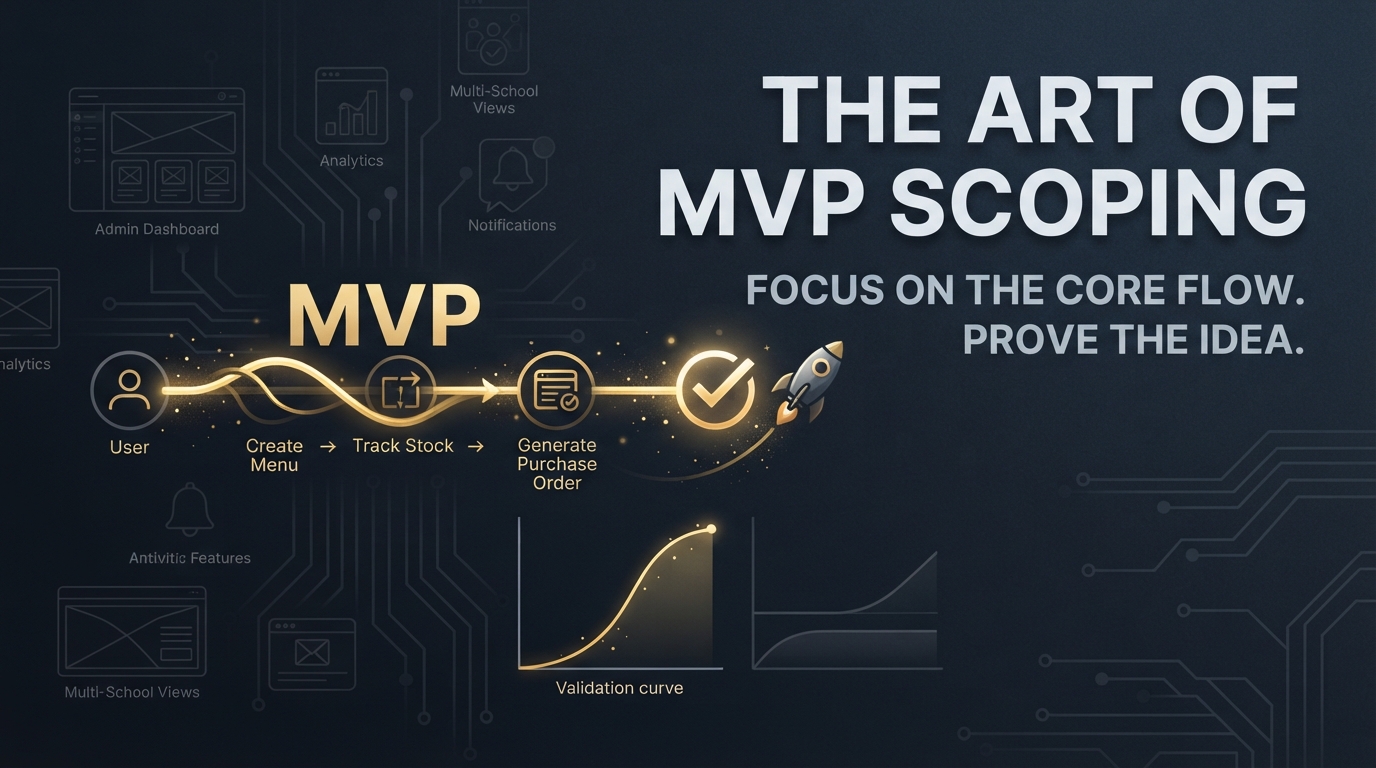
Before writing code, I ask a founder to describe the single sequence of actions a user takes that proves the product's value. Not the whole app, just that one path. For a canteen management platform I built, that path was: create a menu, track ingredient stock, generate a purchase order automatically. Everything else, reporting, multi-school views, staff permissions, came after that loop was solid.
- Identify the one flow that has to work perfectly
- Build that flow with real data, not placeholder content
- Get it in front of real users before adding anything else
- Let actual usage decide what gets built next, not assumptions
Why this saves money, not just time
Every feature you build before validating the core flow is a feature you might throw away. I've seen founders spend their entire early budget on an admin panel nobody used yet, because the core product hadn't proven itself. Scoping tightly isn't about cutting corners, it's about spending the budget on the parts of the product that determine whether it survives contact with real users.
The uncomfortable part
This approach means telling a founder "not yet" more often than "yes." That's a harder conversation than saying yes to everything, but it's the difference between shipping something in 30-60 days that proves the idea, and shipping something in six months that proves nothing because it was never focused enough to test.
Working on something similar?
I take on a limited number of engagements at a time. If this resonates with a project you're planning, let's talk about it.
Get in Touch