What Enterprise Clients Actually Ask Before Trusting a New Tool

H M Husnain
April 14, 2026 · 4 min read
In this article
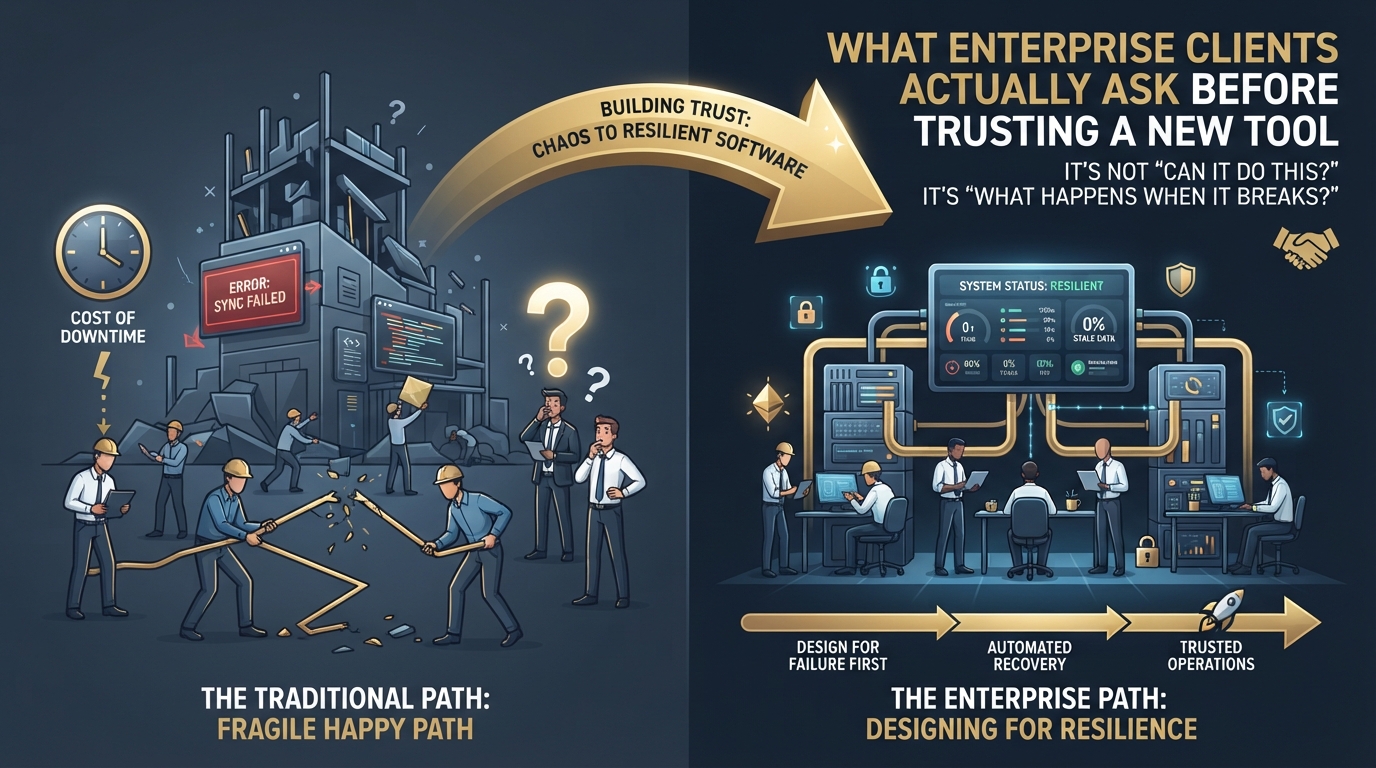
Enterprise clients evaluating a new tool ask one question before any other, even if they never say it in exactly these words: what happens when this breaks?
Why "breaks" isn't abstract in operational software
For a lot of consumer software, a bug is an inconvenience, a page reloads, a button is unresponsive for a second. For an ERP system used by field teams, "breaks" means something with real operational weight: a manager can't approve a task that's blocking someone else's day, a report doesn't sync and a decision gets made on stale numbers, or worse, data goes stale silently and nobody notices until it's already caused a problem downstream.
Designing for the failure case first
Building something enterprise-credible means starting from the failure cases, not the happy path. What happens when a sync fails halfway through. What happens when two field users update the same record while one of them is offline. What does the system show a manager when it genuinely doesn't know the current state of something, versus confidently showing them something wrong. Those aren't edge cases to handle later, they're the actual design problem.
The result, when it's done right
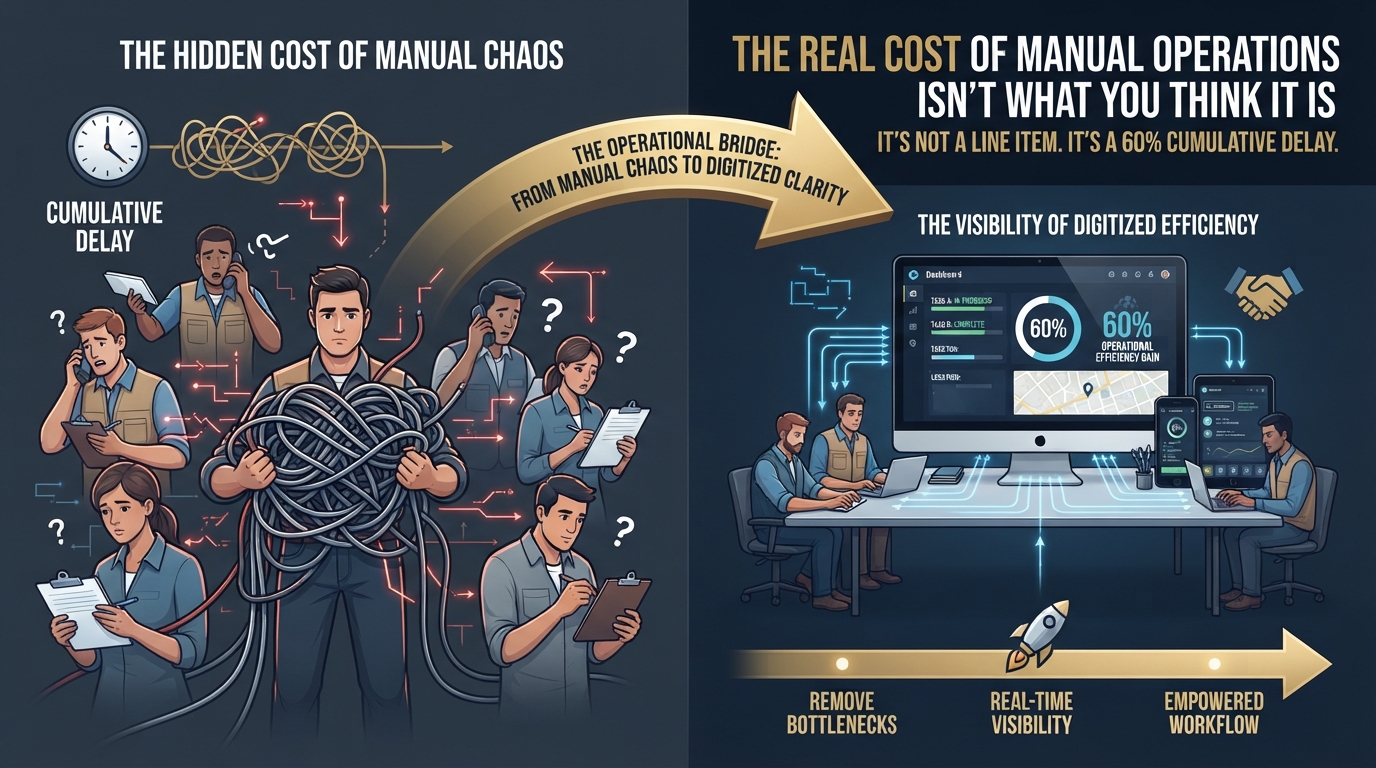
On one ERP-style engagement, enabling reliable real-time remote management, built on React Native and Node.js, cut operational delays by 60% for a business that had been coordinating field teams manually. That number didn't come from adding more features to the system. It came from removing the specific bottlenecks that were forcing people to wait, call, or double-check things that the software should have made obvious.
The mindset shift that's actually hard
Anyone can build the happy path. What separates software a business can actually run on is whether the failure states were designed on purpose, with the same care as the main flow, instead of being whatever fell out of the framework's defaults. That mindset shift is a harder thing to build than any individual feature, and it's the actual difference between a tool a team trusts and one they route around the moment something goes wrong.
Working on something similar?
I take on a limited number of engagements at a time. If this resonates with a project you're planning, let's talk about it.
Get in Touch