Why I Default to Next.js for Most Client Projects

H M Husnain
July 31, 2026 · 4 min read
In this article
Defaulting to a particular framework isn't about it being the most technically interesting option available, it's about how many decisions it quietly removes before a project even starts, which matters more than it sounds like it should.
What a default actually buys you
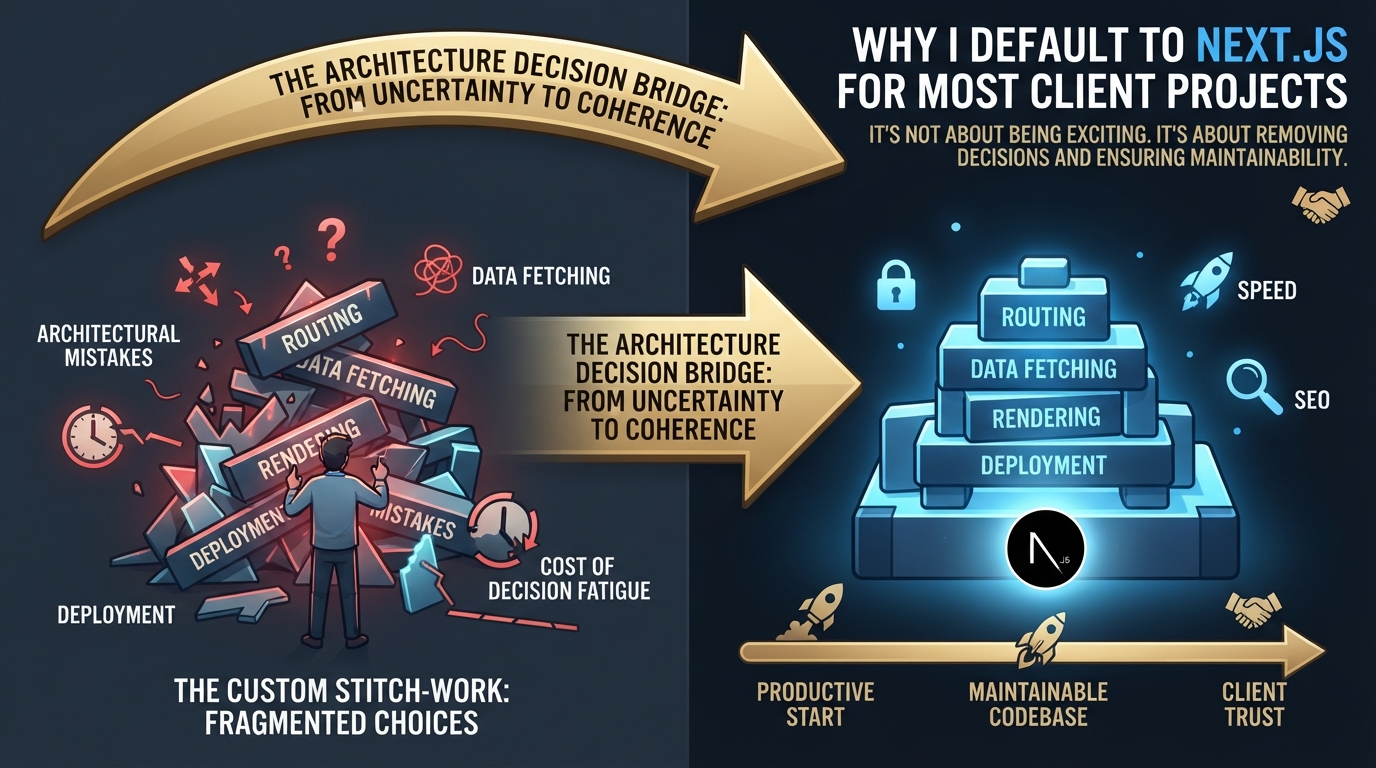
Routing, data fetching, rendering strategy, and deployment are all decided in a coherent, well-supported way out of the box, rather than being a fresh set of architectural choices, and potential mistakes, on every new project. That matters most early in a client engagement, when the actual priority is proving out the product, not debating framework architecture.
Where it specifically fits well
Projects that need both fast initial page loads and rich, app-like interaction, which describes most client-facing products I build, marketing pages that need to be genuinely fast alongside authenticated app functionality, and projects where SEO matters enough that server-rendered content isn't optional. Next.js handles the range from static content to full interactivity within one coherent framework, instead of stitching two different tools together for the two halves of that range.
Where I wouldn't default to it
A project that's purely an internal tool with no public-facing SEO concerns and no need for server rendering doesn't get much benefit from Next.js's specific strengths, and a simpler client-side setup can be the right call there. A project with very specific real-time or native-adjacent requirements might be better served by a different, more specialized stack entirely. Defaulting to something doesn't mean applying it everywhere regardless of fit.
Why "boring but well-supported" wins for client work
Client projects usually need to be maintained by someone, possibly a future team, possibly me a year later, long after the initial build. A framework with strong conventions, wide adoption, and a big ecosystem is easier for someone else to pick up later than a more novel, more "interesting" choice would be. On client work, that maintainability is usually worth more than the marginal technical upside of a less common alternative.
Working on something similar?
I take on a limited number of engagements at a time. If this resonates with a project you're planning, let's talk about it.
Get in Touch