What It Takes to Build a Two-Sided Marketplace From Scratch

H M Husnain
March 3, 2026 · 6 min read
In this article
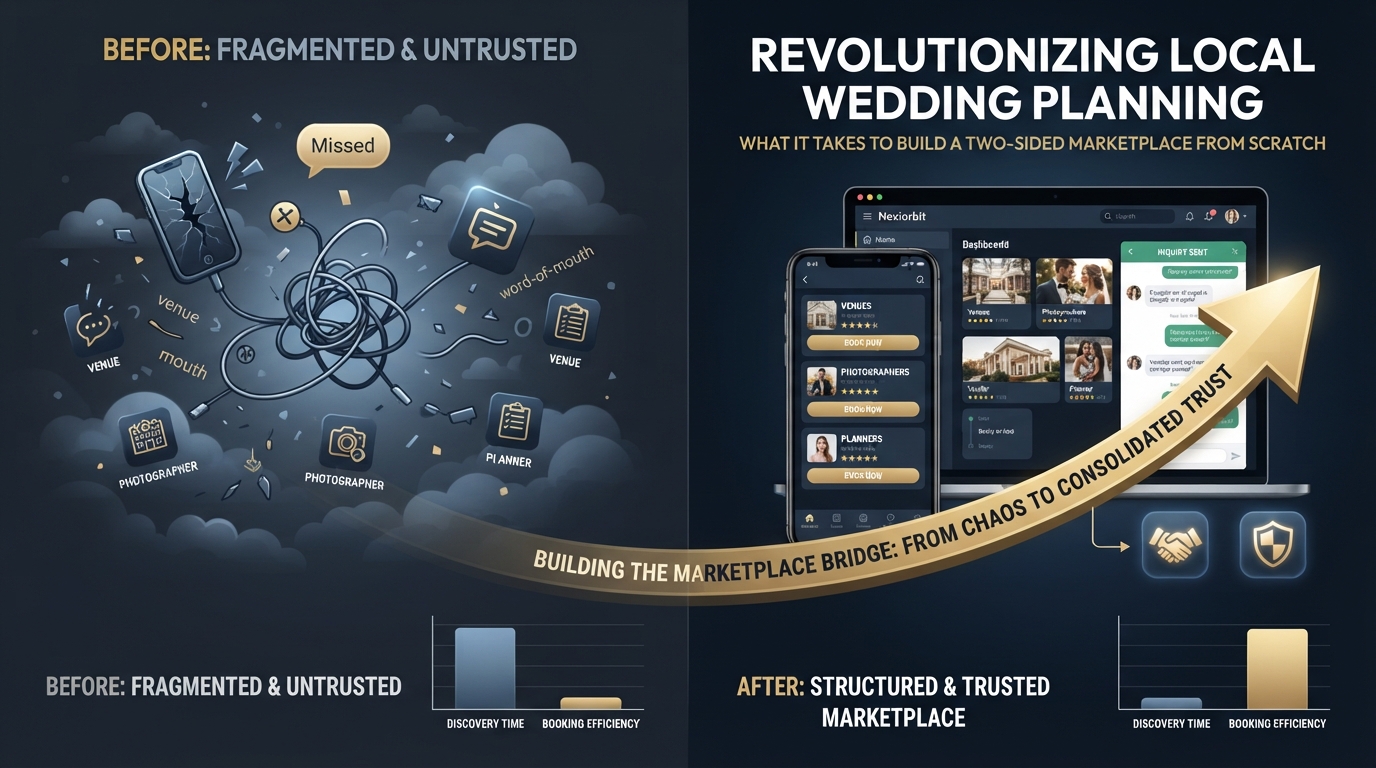
ShadiBazar set out to fix something anyone who's planned a wedding locally will recognize: vendor discovery that runs entirely on WhatsApp groups, phone calls, and word of mouth. No transparency, no easy way to compare, and no record of who said what.
Marketplaces live or die on both sides at once
The hard part of a marketplace isn't the listing page, it's that you need enough vendors to make it useful for couples, and enough couples using it to make it worth a vendor's time to maintain a profile. I designed the architecture around that from the start: category-based vendor browsing, a real-time inquiry and chat system built on Firebase, and a booking request workflow that gave vendors a reason to stay responsive.
What the build actually included
- Multi-vendor marketplace architecture supporting venues, photographers, and event planning services
- Category-based browsing with search and filtering
- Real-time inquiry and chat, so conversations didn't fall back into WhatsApp out of habit
- A structured booking request workflow between clients and vendors
- Notifications for inquiries and responses, keeping both sides engaged without manual follow-up
Impact
Vendor discovery time dropped by 60%, and booking efficiency improved by centralizing communication and availability tracking into one place instead of scattered across calls and chats. For a fragmented local market, that consolidation alone was the product.
What I'd tell anyone building a marketplace
Don't build the pretty listing page first. Build the trust and communication layer first, because that's what actually gets both sides to stop falling back on the old, messy way of doing things. If people can get away with going back to WhatsApp, they will.
Working on something similar?
I take on a limited number of engagements at a time. If this resonates with a project you're planning, let's talk about it.
Get in Touch