How to Read a Developer’s Portfolio (What Actually Tells You Something)

H M Husnain
May 8, 2026 · 4 min read
In this article
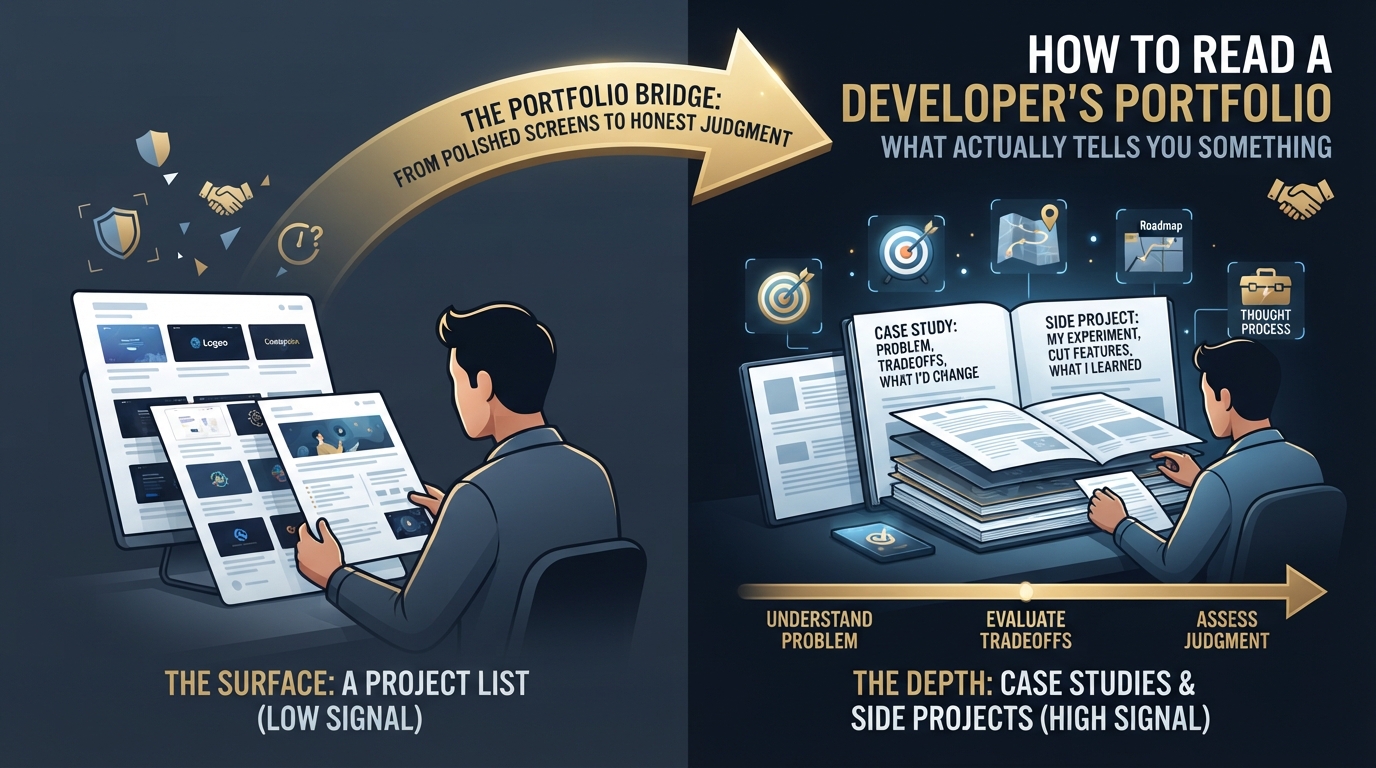
Most developer portfolios are a list of projects with screenshots. That format answers one question, what has this person built, and leaves the more important one, how do they actually think under real constraints, almost entirely unanswered.
What a project list can't tell you
A screenshot and a one-line description tells you a feature existed. It doesn't tell you why it was built that way, what the actual constraint was, or what tradeoff got made when two good options were both on the table. Those decisions are where the real signal of someone's judgment lives, and a project list format has no room for them.
What a real case study does instead
A case study that's actually worth reading explains the problem as it existed before any code was written, the tradeoffs that got made along the way, and, just as importantly, what the person would do differently now. That last part matters more than people give it credit for, anyone can narrate a project as a clean success story after the fact. Being willing to say what they'd change is a much better signal of whether someone thinks clearly, rather than just performing confidence.
Why side projects are the most honest signal of all
A client project shows you someone can execute when they're being paid to. A side project shows what they choose to build when nobody's watching and there's no deadline forcing the decision. The tools, the experiments, the half-finished apps that never shipped, the process of building one, and what got cut along the way, tells you more about how someone actually thinks than any bullet point on a resume ever will. Not every side project needs to have shipped for that to be true.
What to actually look for
When you're evaluating a developer's portfolio, whether you're a client or a hiring manager, skip past whether the screenshots look polished. Look for whether they explain the actual problem they were solving, whether they're honest about tradeoffs and what they'd change, and whether there's any evidence of what they build when nobody's paying them to. That combination tells you far more than a longer list of logos ever will.
Working on something similar?
I take on a limited number of engagements at a time. If this resonates with a project you're planning, let's talk about it.
Get in Touch