The Real Difference Between a Quick Gig and a Properly Engineered Product

H M Husnain
February 7, 2026 · 5 min read
In this article
I've built products both ways: as a fast, cheap turnaround, and as a properly scoped engagement. The visible output can look similar in a demo. What's underneath almost never is.
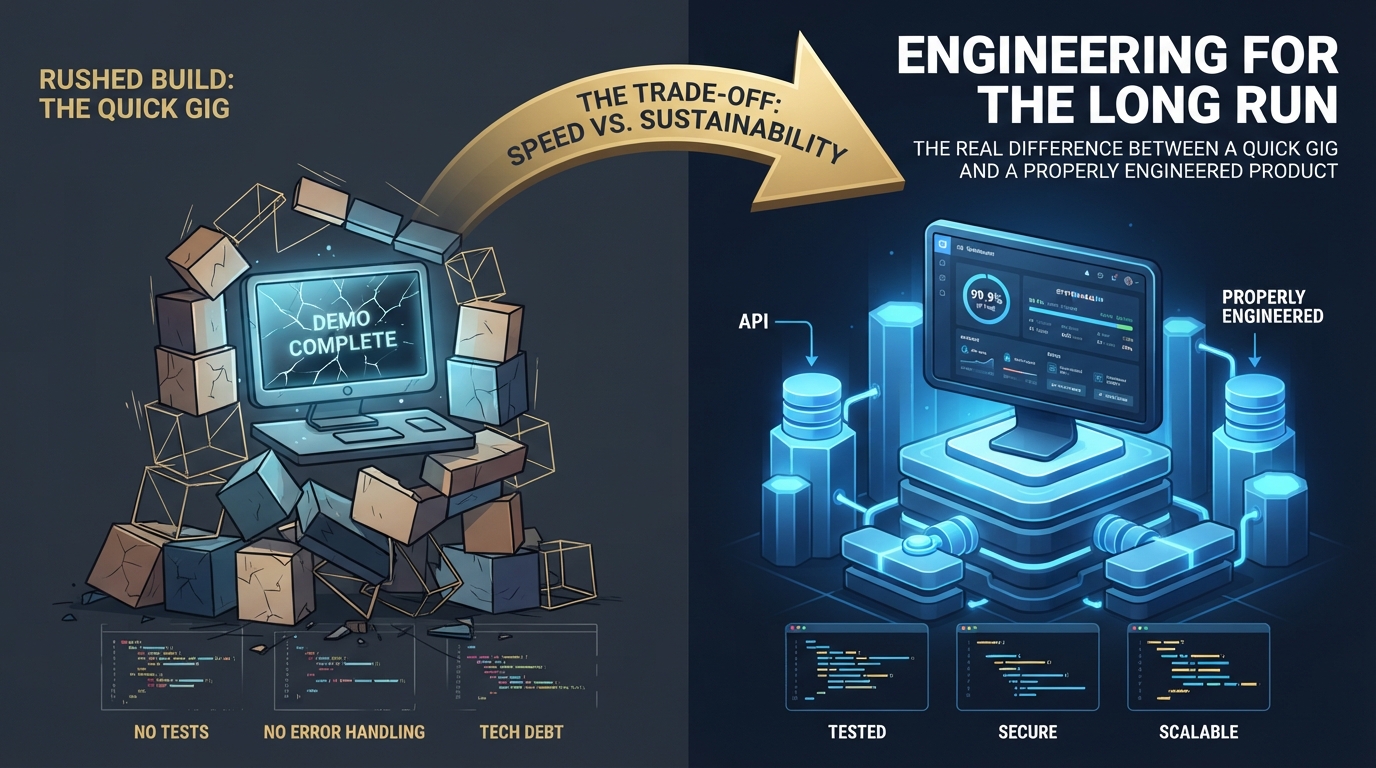
What a rushed build optimizes for
A quick gig optimizes for one thing: getting something on screen that looks done. That's a legitimate goal sometimes, a landing page to test a headline, a throwaway prototype. But when that same approach gets used for a product meant to carry real users and real data, the shortcuts show up later as outages, data loss, or a codebase nobody can safely extend.
What actually costs time in a rushed build
- No error handling beyond the happy path, so the first unexpected input breaks something
- No thought given to what happens when the app needs a second feature added later
- Security treated as a checklist item at the end instead of a constraint from the start
- Zero tests, so every change is a gamble
What a properly engineered build looks like instead
It's slower to reach a demo, and that's the trade founders have to weigh honestly. But the extra time upfront goes into things that don't show up in a screenshot: a database schema that won't need to be rebuilt at 10x the users, an API structure that a second developer could actually understand, monitoring that tells you something broke before your users do.
How I explain this to clients
I ask them one question: are you building something you'll throw away after this validates, or something you intend to keep running and growing? The honest answer to that question decides how I scope the work, and it should decide who you hire to build it too. Both approaches are valid, they're just answers to different problems.
Working on something similar?
I take on a limited number of engagements at a time. If this resonates with a project you're planning, let's talk about it.
Get in Touch