The First 30 Days of an Advisory Engagement

H M Husnain
July 7, 2026 · 4 min read
In this article
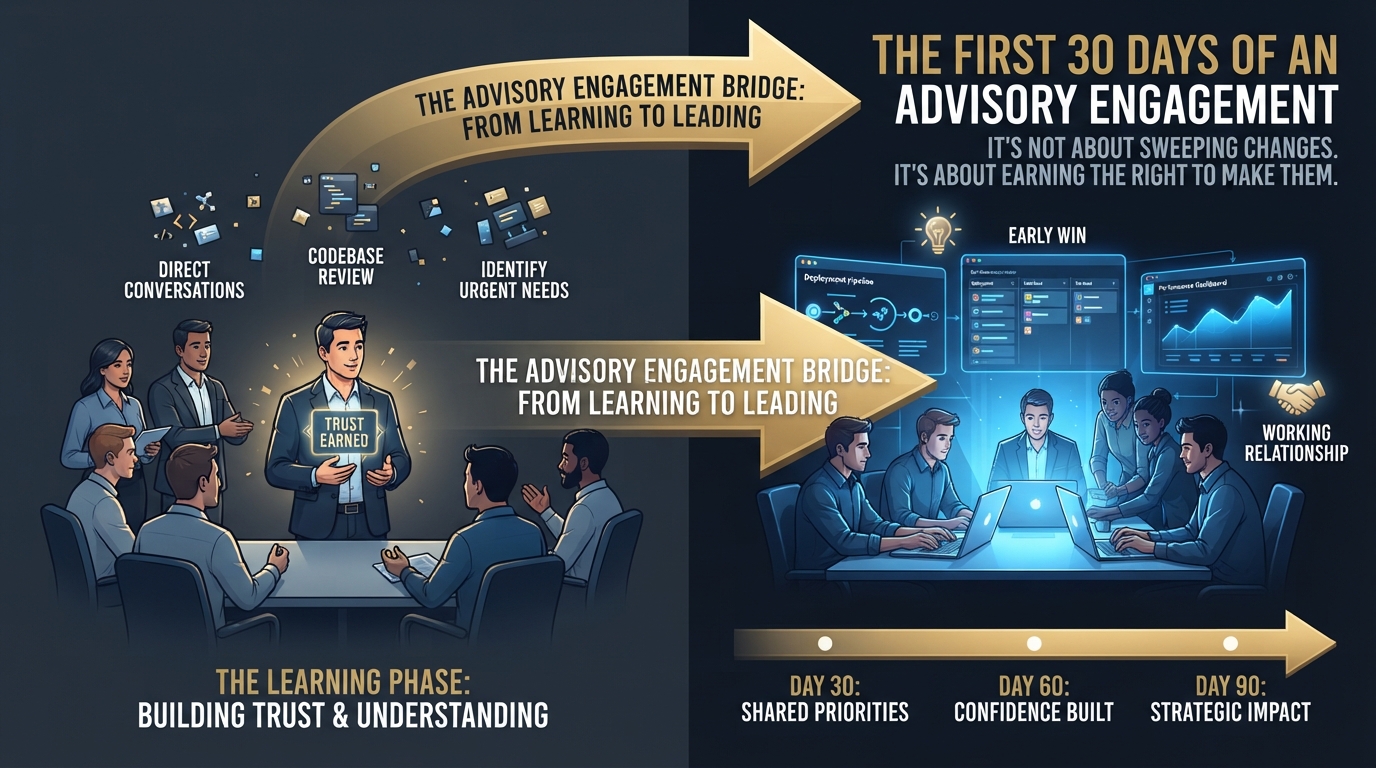
The first month of a fractional CTO or advisory engagement isn't about making big changes. It's about building an accurate enough picture of the business that any changes that follow are actually the right ones, and earning enough trust with the team that those changes land well.
What the early weeks are actually for
Understanding the real technical landscape, not the documented version of it, but what's actually running, what's actually fragile, and what the team actually believes about their own systems, which isn't always the same thing. Meeting the people who'll be affected by any decisions that follow, individually where possible, since group settings rarely surface the honest, specific concerns that one-on-one conversations do. Identifying the handful of things that are genuinely urgent versus the much longer list of things that are merely imperfect, because trying to fix everything in month one is how trust gets spent too fast on the wrong priorities.
The mistake I'd actively avoid
Coming in and immediately proposing sweeping changes based on a first impression. Even when a problem looks obvious from the outside, there's almost always context a new advisor doesn't have yet, a reason something is the way it is, a past attempt that didn't work, a constraint that isn't visible on the surface. Moving too fast on first impressions is how an advisor loses the team's trust before they've earned enough of it to be genuinely useful.
What should actually be different by day 30
A clear, shared understanding, between the advisor and the business, of what the real priorities are and why. A small number of early, visible wins, not necessarily the biggest problems, but ones that build confidence the engagement is worth the investment. And a working relationship with the team that isn't adversarial, an advisor who's seen as helping solve real problems, not one who showed up to criticize how things were done before they arrived.
Why this pacing matters
An advisory relationship that moves too fast in the first month often doesn't get the chance to make it to the second. One that moves deliberately, and shows real judgment early, earns the standing to make bigger calls later, when they actually matter.
Working on something similar?
I take on a limited number of engagements at a time. If this resonates with a project you're planning, let's talk about it.
Get in Touch