Scheduling Software Sounds Simple Until You Build One

H M Husnain
March 15, 2026 · 5 min read
In this article
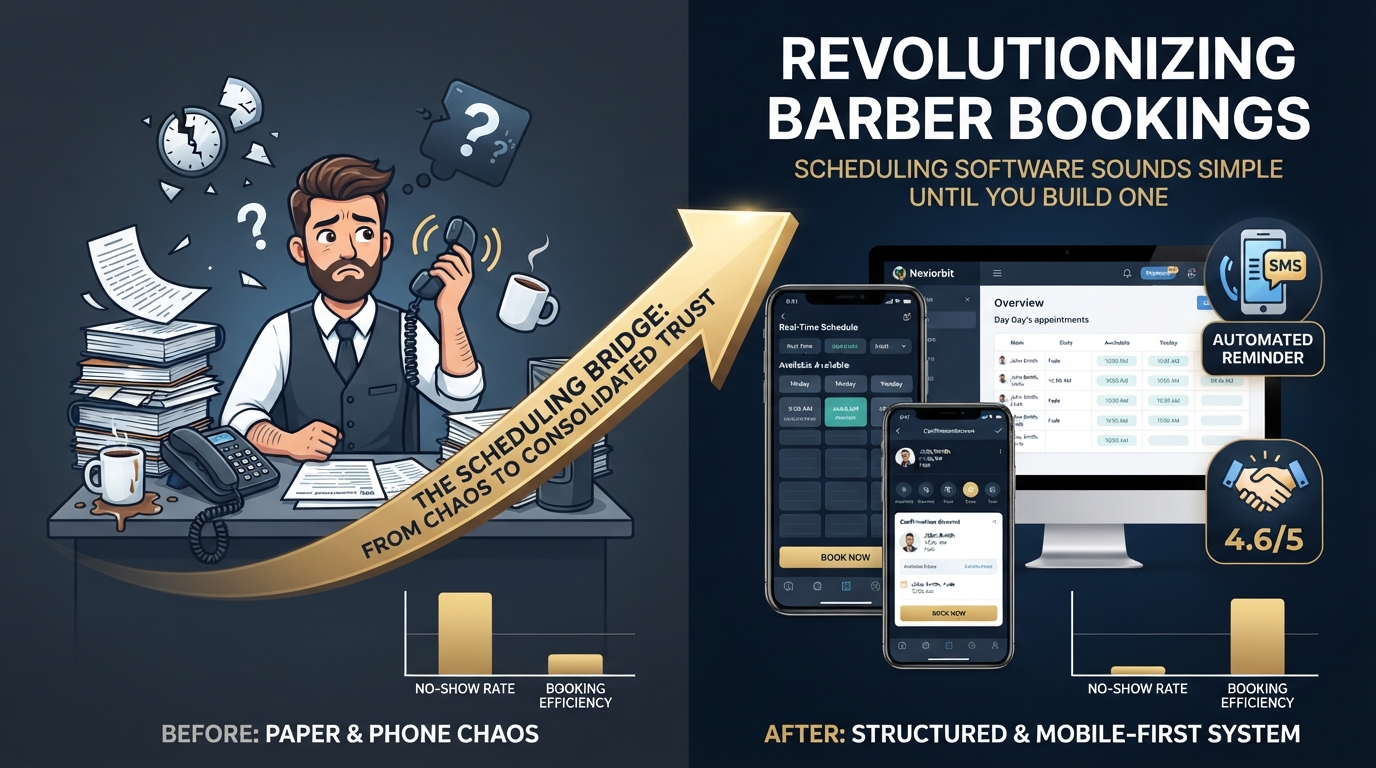
Booking software sounds like a solved problem until you're the one building it for a business that's been running on paper and phone calls. A barber shop client was losing appointments to double-bookings and no-shows, with customers unable to see availability or book anything outside business hours.
The tempting mistake: over-building it
The instinct with scheduling software is to build something sophisticated, waitlists, dynamic pricing, complex recurring rules. I deliberately didn't start there. I built real-time availability tracking, automated reminders, and online payments first, and left the more elaborate features out entirely.
What actually shipped
- Real-time availability tracking to eliminate double-bookings
- Automated SMS reminders sent 24 hours before an appointment
- Stripe integration for secure online payments at time of booking
- An admin dashboard for the shop to manage its own schedule
- A customer review system
- Google Maps integration so new customers could find the shop in the first place
Impact
No-shows dropped from 35% to 5%. Booking efficiency improved by 85%, and 65% of all bookings now happen online instead of by phone. Customer satisfaction sits at 4.6/5.
What actually moved those numbers
Almost all of the impact came from the reminder system, not from anything structurally clever. A 24-hour SMS nudge did more to fix no-shows than any amount of scheduling sophistication would have. Service businesses aren't retail: the constraint isn't inventory, it's a person's calendar, and mobile accessibility for both the shop and the customer wasn't optional, it was the baseline requirement the whole thing was built around.
Working on something similar?
I take on a limited number of engagements at a time. If this resonates with a project you're planning, let's talk about it.
Get in Touch