AI Coding Tools: Where They Help and Where They Don’t

H M Husnain
August 18, 2026 · 4 min read
In this article
The honest take on AI coding tools is neither "it writes all my code now" nor "I don't trust it," both of which are more about performing a position than describing how the tools actually fit into real client work. The more accurate answer is a lot more specific than either extreme.
Where they genuinely help
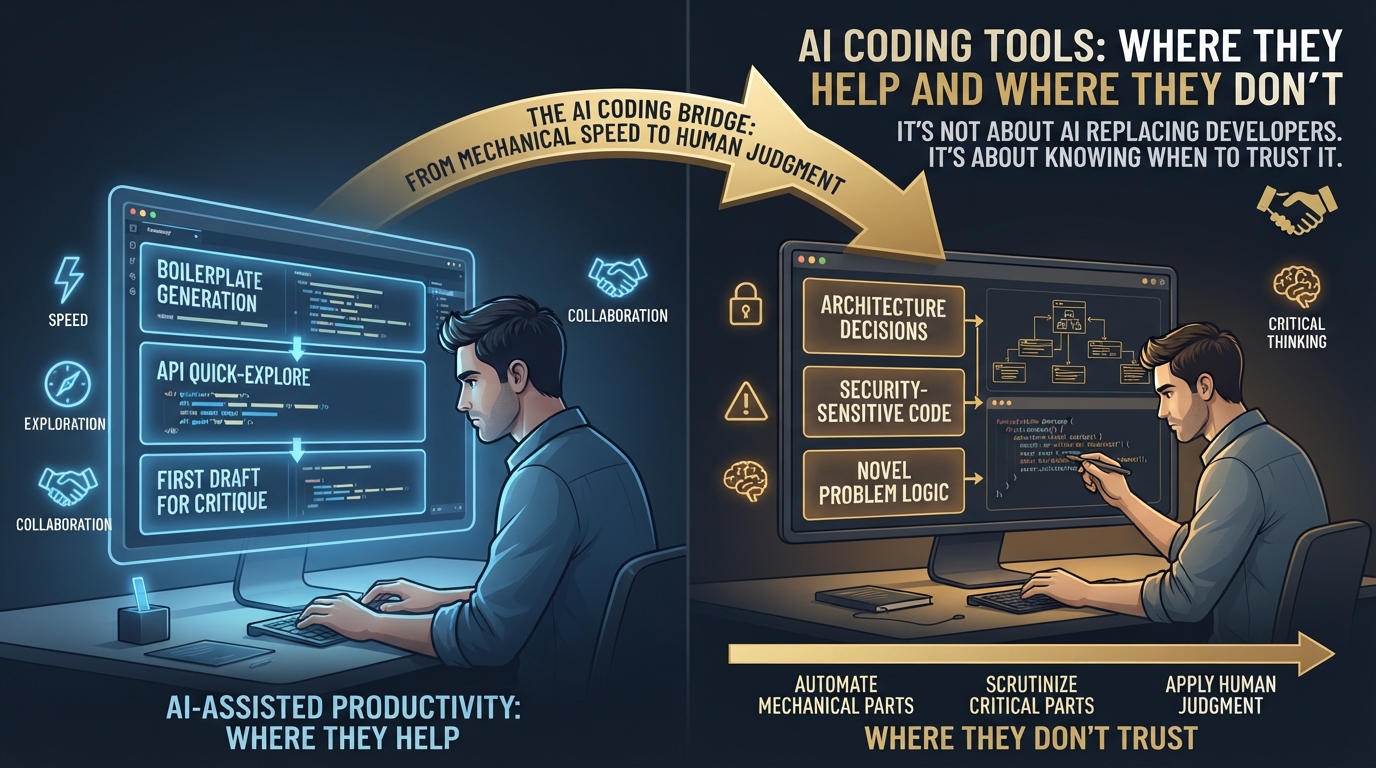
Boilerplate and repetitive, well-understood patterns, the kind of code where the shape is already known and the value is in getting it written quickly and correctly, not in the thinking behind it. Exploring an unfamiliar library or API quickly, faster than digging through documentation for a first pass, with the understanding that the output still needs to be verified against real docs, not trusted blindly. A first draft to react to, sometimes it's faster to critique and fix a rough first attempt than to produce a first attempt from a blank page, even when a fair amount of that first attempt ends up rewritten.
Where I don't trust them yet
Architecture-level decisions, where the actual constraint is understanding a specific business's real tradeoffs, not producing plausible-looking code. Security-sensitive code, authentication, payment handling, anything where a subtly wrong but confident-looking suggestion could cause real damage that isn't obvious on a quick read. Anything genuinely novel to the specific problem at hand, since these tools are fundamentally pattern-matching against what's been written before, and a problem that's actually new to this business doesn't have a strong pattern to match against yet.
The actual skill this requires
Knowing, quickly, whether a given piece of output is a shortcut worth taking or a plausible-sounding answer that needs real scrutiny. That judgment doesn't come from the tool, it comes from already understanding the problem well enough to know what a correct answer should roughly look like before checking whether the suggestion matches.
Where this leaves client work
These tools speed up the mechanical parts of building software. They don't replace the parts of the job that were never really about typing code in the first place, understanding what a client actually needs, making judgment calls under real constraints, and knowing which shortcuts are safe to take. That's still where the actual value of hiring a person, instead of just using a tool, comes from.
Working on something similar?
I take on a limited number of engagements at a time. If this resonates with a project you're planning, let's talk about it.
Get in Touch